

Blog
IQOS vs Cigarettes vs Vape: The Ultimate Guide to Making an Informed Choice

Nicotine delivery has been transformed over the last decade. Conventional cigarette smoking continues to fall in many countries, but the alternatives have proliferated. And heat-not-burn, like IQOS, holds the promise of a cleaner tobacco experience. Vapes give you thousands of flavors and save money. But what actually makes sense for your health, bank account and lifestyle?
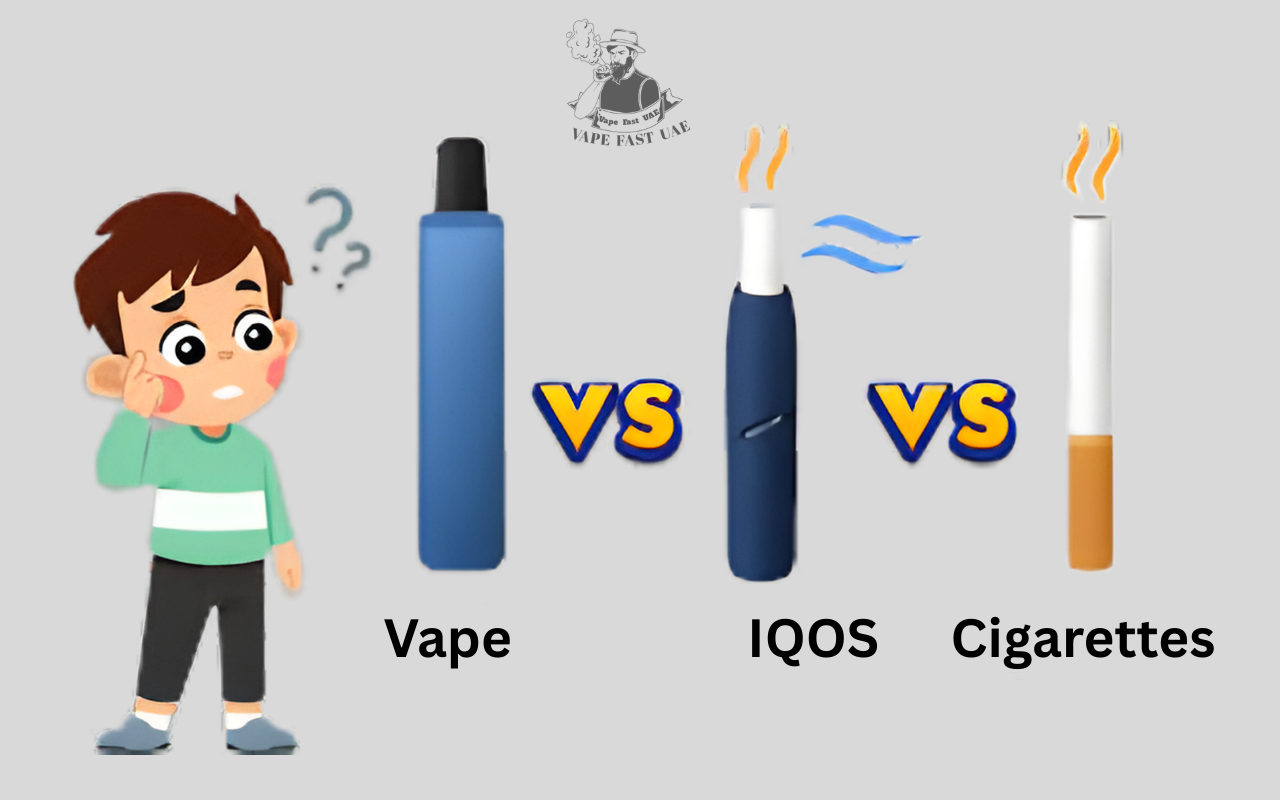
This guide breaks through the clouds of marketing spin to deliver an evidence-based comparison between smoking, IQOS and vaping. We’ll cover how each method works, what the most current research says about health risks and which option may be right for you. At the end, you should have a pretty good grip on what sets these Electronic Nicotine Delivery Systems (ENDS) apart – and where they fall in the overall Tobacco Harm Reduction discussion.
Understanding the Basics: How Do They Differ?
Before getting into the relative health effects or costs, it’s useful to know what you’re actually doing with each one.
Cigarettes: Combustion-Based Smoking
Traditional cigarettes work through combustion. When you light a cigarette, it is the tobacco that burns at temperatures of around 600°C (1,112°F). This process produces smoke loaded with thousands of chemicals and toxins, including tar, carbon monoxide and many cancer-causing agents. The ash, smell that endures and visible plume are all consequences of this combustion process.
IQOS: Heat-Not-Burn Technology
IQOS represents a different approach. It does not burn tobacco; instead, it heats a specially designed tobacco stick (TEREA or HEETS depending on the device) to temperatures of up to 350°C. This temperature is sufficient to release nicotine and tobacco vapor but insufficient for combustion. The result? No smoke, no ash and only a fraction of the dangerous chemicals found in cigarette smoke.
Vaping: E-liquid Vaporization
Vapes take yet another route. Operating on a battery, these battery-powered devices warm up a liquid solution (which usually contains propylene glycol, vegetable glycerin, flavorings and nicotine) with its metal coil. The liquid turns into an aerosol that the user inhales. Unlike cigarettes and IQOS, there’s no tobacco at all in vapes — just nicotine that has been extracted and changed into an e-liquid.
Each method provides nicotine in a different way, and those variances are meaningful for health, cost and the user experience.
Health & Safety: What Does the 2026 Research Say?
The question everyone’s asking: how can I do this most safely? The brief answer is no, none of these products are risk free. But the evidence is clear: There is a harm hierarchy.
The Harm Hierarchy
Cigarettes are still the most dangerous choice. The majority of toxic chemicals in tobacco smoke are produced by combustion. Studies over many years have demonstrated clear connections between smoking and lung cancer as well as heart disease, stroke and chronic respiratory diseases.
IQOS and vapes are both further down on the risk spectrum. Research has shown that heat-not-burn products and e-cigarettes are 95% less harmful than tobacco when it comes to being exposed to toxicants. This decrease doesn’t mean these products are safe, but it does mean they’re very likely less bad for you than smoking.
Carcinogens & Toxins
Cigarette smoke is home to more than 7,000 chemicals, at least 70 of which cause cancer. IQOS aerosol has fewer toxicants simply because the tobacco doesn’t combust. Independent studies have found a reduction of carbon monoxide, tar and other toxicants in IQOS emissions versus cigarette smoke.
Vapes also emit fewer toxins than cigarettes, although the exact profile is different. The aerosol from e-cigarettes generally has fewer harmful chemicals than tobacco smoke. However, some research has raised concerns about specific flavoring compounds and the potential harms of breathing them in regularly.
Long-term Effects: The 2026 Perspective
Long-term health data on IQOS and vaping is scarce since both products are relatively new. Yet early signs from longitudinal studies are encouraging for those who switch entirely from cigarettes to such alternatives.
Cardiovascular benefits take weeks after quitting smoking. Lung function may improve, although how much probably depends on how long someone smoked and a person’s overall health, Dr. England said. The critical issue is full switching — smoking cigarettes in addition to using IQOS or vapes would negate any potential health gain.
The “Dual Use” Trap
This point deserves emphasis: You won’t realize the health benefits you’re seeking if you continue to smoke along with IQOS or vapes. There’s still absolutely no safe way to inhale cigarette smoke. You have to be DONE if you want to do harm reduction.
Cost Comparison: The Financial Impact
When it comes to health, the most important thing isn’t how much is spent but what a person gets for that money. So what do they really cost, at the end of the day?
Initial Investment
Cigarettes don’t require an upfront investment on anything more than your first pack. IQOS devices sell for between $50 and $150, depending on the model as well as any promotion available. Starter vape kits start at $20, and the high-end ones can be more expensive.
Ongoing Expenses
This is where the numbers change drastically.
Cigarettes are the most expensive daily purchase. If you’re a pack-a-dayer in the US, you’re spending between $16 – $18 per day or around $480 to $540 a month. In the UK, which has higher tobacco taxes, costs can soar above £500 ($600+) per month.
IQOS falls in the middle. The TEREA/HEETS sticks are generally cheaper than cigarettes in most markets, offering savings of anywhere from 20–30% versus traditional smoking. Moderate users spend in the range of $250–$350 per month on average.
Vaping (with a refillable pod system) is the cheapest in the long run. Difference in cost between e-liquid and tobacco e-Liquid is much cheaper than tobacco. How much do regular vapers spend each month? Regular vapers easily spend between $50-150 a month on average, varies by usage and type of device used.
2026 Taxes: A Changing Landscape
Tax policies continue to evolve. In recent years, many states have either implemented or sharply raised vape taxes, shrinking the cost disparity between vaping and other nicotine products. Some areas have also added extra taxes on heated tobacco devices. See local pricing at your grocery or fish store.
User Experience: Taste, Smell, and Social Impact
Numbers offer some of the story. Daily experience tells the rest.
Flavor Profiles
IQOS taste similar like real tobacco since it is real tobacco. This flavor is close to the taste of traditional cigarettes and many users like that. But the flavor choices are limited to tobacco styles and menthol (where allowed by law).
Vapes come in so many flavors: Tobacco, menthol, and fruit are just a few. This variety is a big draw for many customers, although regulations regarding certain flavors are becoming more strict in 2026, with disposables vapes being the most affected.
Cigarettes still feature the familiar taste that smokers are accustomed to, but combustion produces harsher, more acrid flavors alongside those of tobacco.
Odors & Staining
Cigarette smoke seeps into clothes, furniture and hair. It smells for a long time and your fingers and white teeth yellowify.
The milder smell of IQOS also disappears more rapidly. Although still pervasive, it is not quite as offensive in how easily the smell penetrates other people’s clothing, for example, into their sofas. There is very little staining as compared to smoking.
Vapes generally give off sweet or fruity odours that quickly dissipate. It doesn’t have the yellowing effects of tobacco smoke, and the vapor is inodorous and does not stick to clothes or linger in a room.
Social Acceptance and Regulations
(This is all subject to interpretation based on your region and social circle, of course.) Cigarette smoking is increasingly limited, with bans in most public indoor places, restaurants and workplaces.
Local laws play a large part in the regulation on Iqos and vaping. Some places consider their use alongside cigarettes, banning them from the same establishments. Others permit vaping in locations where smoking is prohibited. As always, check local regulations before publicly using any nicotine product.
Pros and Cons at a Glance
| Feature | Cigarettes | IQOS | Vape |
| Combustion? | Yes | No | No |
| Contains Tobacco? | Yes | Yes | No |
| Ease of Use | High | Medium (Charging required) | Medium (Refilling required) |
| Initial Cost | Low | High | Medium |
| Monthly Cost | $480–$540 | $250–$350 | $50–$150 |
| Health Risk | Maximum | Reduced | Reduced |
| Odor | Strong, persistent | Mild, fades quickly | Sweet, dissipates fast |
| Flavor Options | Limited | Limited | Extensive |
Making Your Choice: What’s Right for You?
Best”What’s best will be whatever is most important to you and your immediate objectives.
If you like the true taste of tobacco and you are looking to take a step toward harm reduction without sacrificing the experience you are used to, then IQOS is kind of a balance. The authentic taste combined with the low levels of chemicals is reasonable enough to attract ex-smokers.
It is vaping that offers the most inexpensive long-term option, if it were a choice between savings and flavor. The variety in flavors and low ongoing costs makes it appealing for cost-minded vapers looking to learn how to maintain equipment.
But, to be blunt about the healthiest option: Quitting all nicotine products completely. Although IQOS and vapes seem to be less harmful than cigarettes, they are still risky. The addictive nature of nicotine persist irrespective of its mode of delivery. Full abstinence provides the largest health benefit.